Building a Website Without Market Intelligence Is a Gamble You Can No Longer Afford
Codexo websites are moving toward an Agentic SEO build process where the platform scrapes, compares, and studies the niche before content is written. The site strategy starts with competitor gaps and keyword intent, not guesses from a blank homepage.
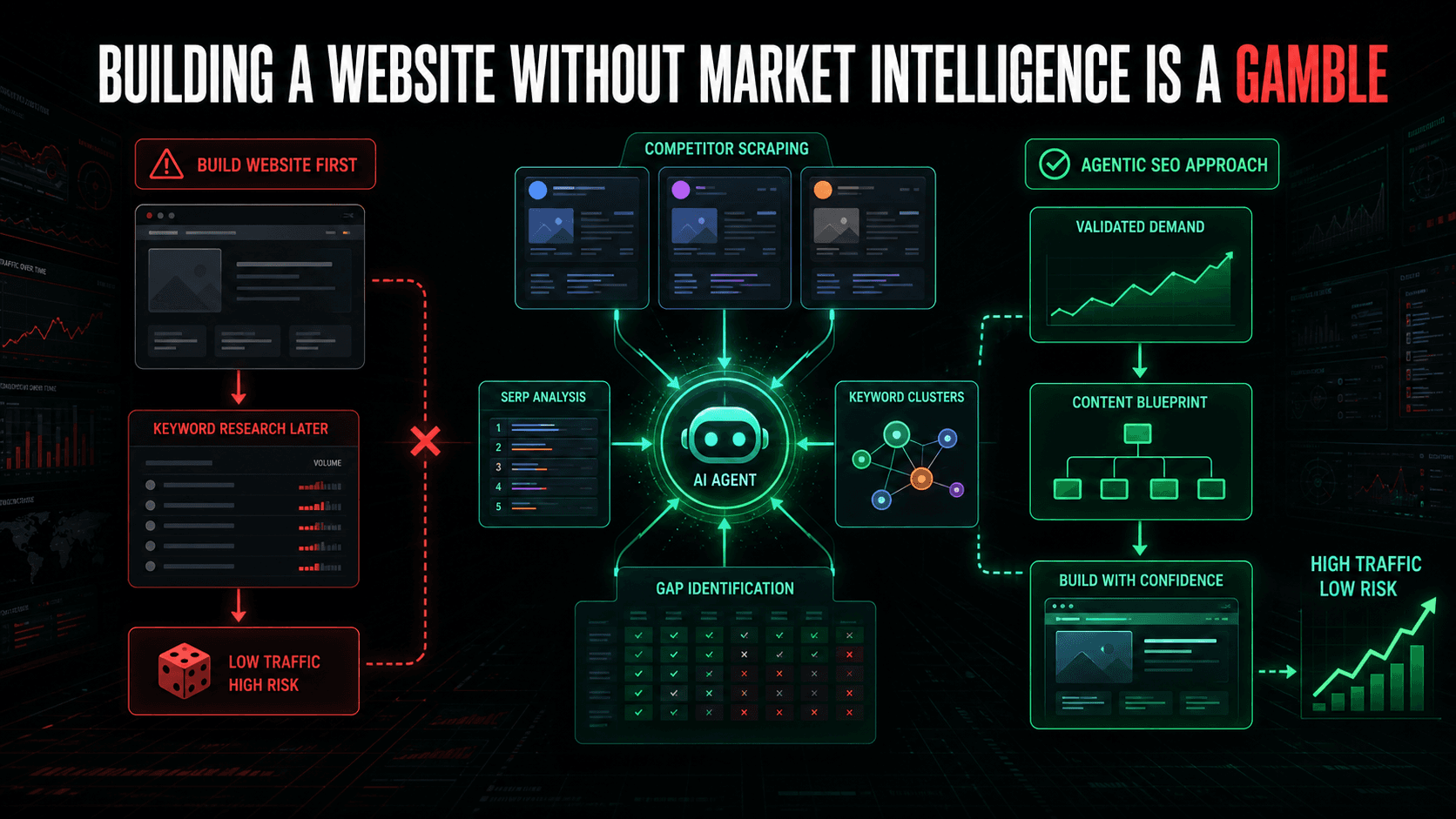
The old website process starts with aesthetics and fixes demand later
Most websites still start with layout, colors, headlines, and a few pages the business already knows it needs. Keyword research comes later, if it happens at all. Competitor analysis becomes a report instead of the foundation of the build.
That order is backward. A website is supposed to capture demand. If the team has not studied how people search, what competitors cover, which service pages are missing, and where local intent is under-served, the site is being built from assumptions.
The danger is not an ugly website. The danger is a beautiful website that has no strategic surface area. It looks finished while missing the pages, terms, and answer paths that buyers are already using.
A website built before market intelligence is a design bet, not a demand system.
Our build process starts by scraping and comparing the niche
The Agentic SEO platform we are using can scrape and compare businesses inside a niche before the website content is created. That lets us study how competitors frame services, which keywords appear across the market, what questions buyers are asking, and where the content gaps sit.
From there, the site can be planned around service clusters, location pages, problem pages, conversion paths, internal links, and offer sections that match real demand. The agent is not just writing copy. It is helping decide what the site should become.
This is especially important for local service businesses. A generic homepage and five thin service pages cannot cover the way customers search for symptoms, urgency, locations, equipment, pricing, and proof.
Keyword research before content changes the entire site
When the keyword and competitor research happens first, the pages become sharper. Headlines can match buying intent. Service sections can answer the right objections. Calls to action can match the stage of the searcher instead of repeating the same generic booking line everywhere.
It also changes the information architecture. The site can support related services, city-level pages, comparison content, seasonal demand, FAQs, and proof sections from the beginning instead of bolting them on six months later.
That is why this matters. The website is no longer a brochure that gets optimized later. It becomes a search-informed operating asset from day one.
The competitor who builds from intelligence gets a head start you cannot see
The scary part is that this advantage is mostly invisible at launch. Two sites can look polished, but one may have an entire demand map behind it while the other is just a collection of pages.
Over time, the intelligence-built site compounds. It covers more intent, answers more buyer questions, earns more qualified impressions, and gives the CRM more useful source context.
That is the shift we are building around. In 2026, a website that does not start with market intelligence is already behind before it goes live.
Your next website should know the market before it says a word.
We will show how Agentic SEO can shape your site architecture, page strategy, and CRM conversion paths before the first page is built.
Book a Strategy Call