Automation Without Decision Logic Breaks the Moment Your Pipeline Gets Real
Static automations are useful until the business needs judgment. The next generation of workflows will not just move tasks between tools. They will decide which action fits the lead, account, timing, and offer context.
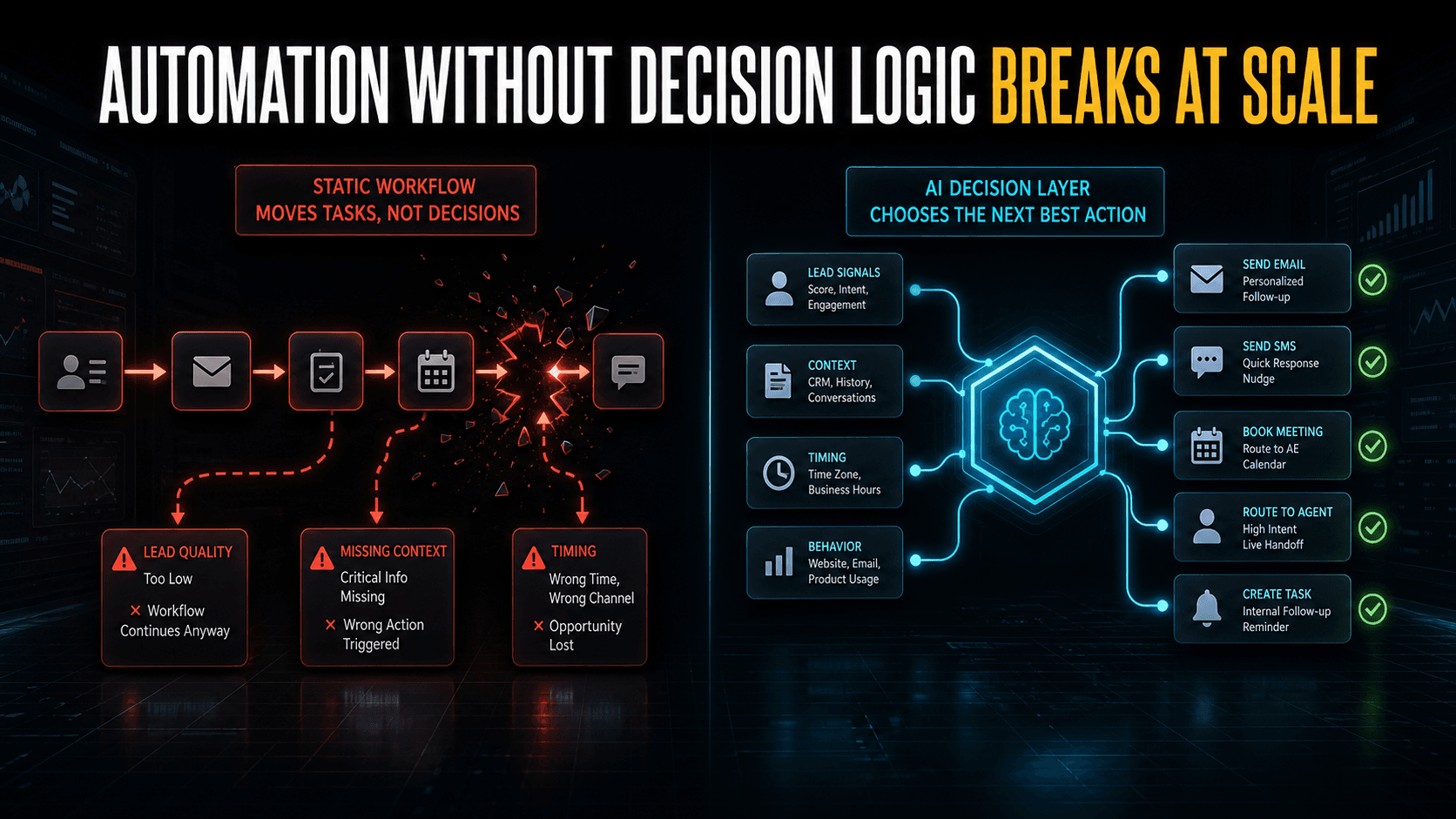
Static workflows look clean until the exceptions arrive
Most automations are built like conveyor belts. If this happens, do that. Wait two days. Send the next message. Move the stage. Notify the team. That structure is helpful, but it assumes the lead fits the pattern.
Real pipelines do not stay that clean. A lead may be high value but slow to respond. A low-fit account may engage quickly. A customer may return with a different need. A prospect may need a call, not another email.
When the automation cannot reason about the difference, it keeps moving. That is how teams end up with activity that looks efficient while the buyer experience feels tone-deaf.
Automation that cannot make decisions eventually becomes a faster way to make the wrong move.
The decision layer sits between signal and action
The better model is to place an intelligence layer between the trigger and the next action. That layer checks the lead state, account fit, message history, timing, channel preference, urgency, and available offer before deciding what should happen.
Sometimes the next step is an email. Sometimes it is SMS. Sometimes it is a task for a human. Sometimes it is no action because the lead needs more data first.
This is the direction Codexo keeps building toward. Automation should not only connect tools. It should preserve context and apply judgment before it touches the customer.
Scaling bad logic is worse than staying manual
Manual work is slow, but at least people can sometimes catch context. Bad automation is fast and confident. It can repeat the wrong message across a list, route qualified leads into dead paths, or make follow-up feel robotic right when trust matters.
That is why we are careful about the systems we build. The goal is not to automate every step. The goal is to automate the steps where the logic is clear and give the agent or operator enough context when the situation requires judgment.
The companies that win will not have the most automations. They will have the best operating logic.
The question every business should ask
Look at any automation in the CRM and ask one question: what does this workflow know before it acts? If the answer is only that time passed or a form was submitted, the workflow may be too blind for the job.
Modern automation needs to know fit, context, history, urgency, and timing. It needs to know when to keep moving and when to bring a human in.
If it cannot answer those questions, the automation is not an operating advantage. It is a fragile shortcut.
Your automations should know why they are acting.
We can audit your workflows and identify where decision logic would prevent missed revenue, bad timing, and customer friction.
Book a Strategy Call