Manual Follow-Up Is a Revenue Leak and Most Teams Cannot See It
Codexo has started implementing an internal Leads Operating System that grades prospects, shows where each lead stands, and lets the AI agent decide what communication should happen on day one, day two, day three, and when the call window is strongest.
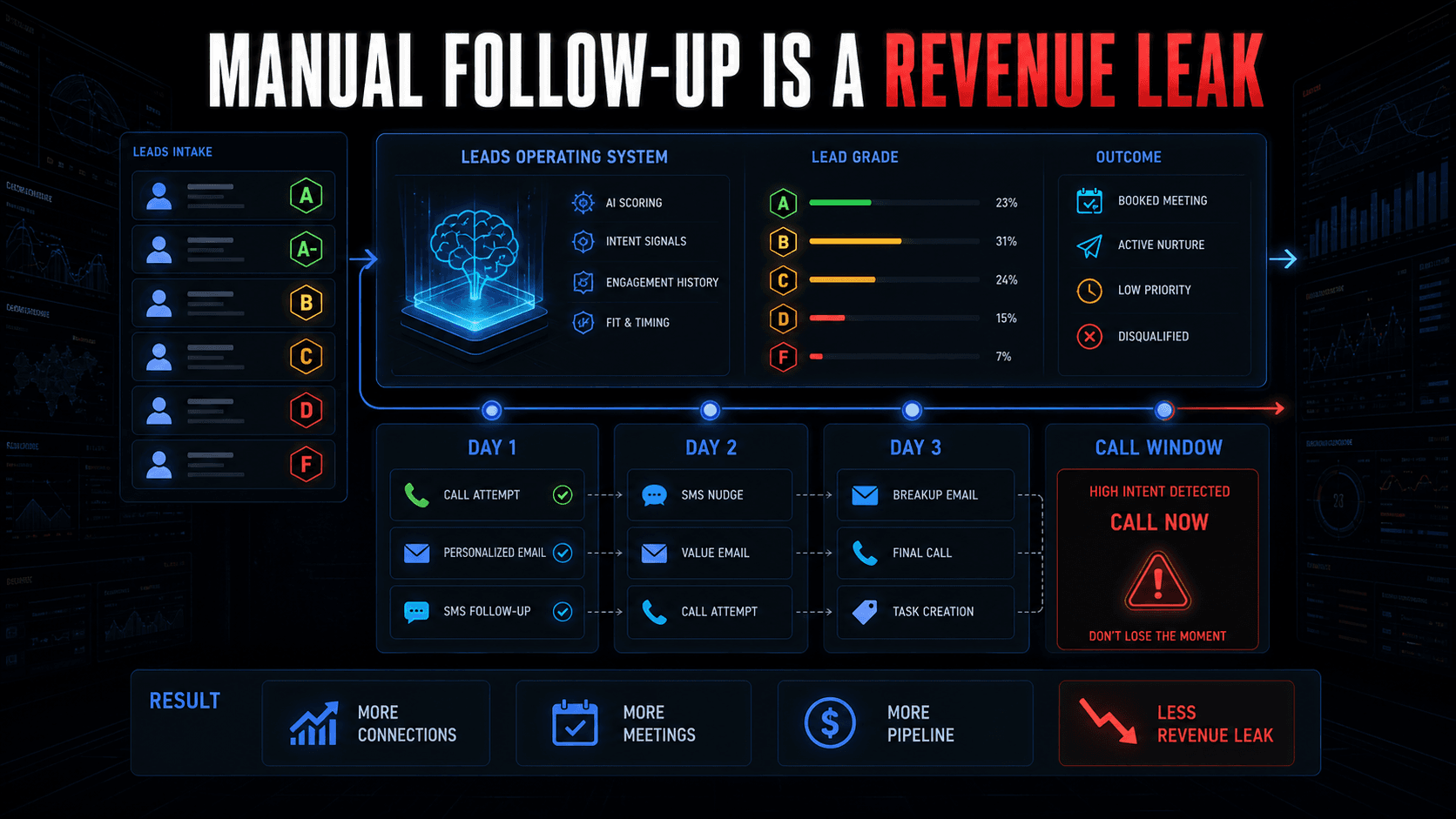
The leak is not always missed calls. It is missed timing
A lead can be captured and still be wasted. The form fills out. The contact gets created. The owner sees the notification. Then the lead sits while the team decides what to send, who should call, and whether it is too soon to follow up.
That delay is expensive because buyer intent has a half-life. The first day needs one type of communication. The second day needs another. The third day needs a different approach. A hot lead may need a call window alert before a normal task reminder ever matters.
Most teams try to solve this with separate automations. The problem is that the automation usually does not understand the lead. It only knows that time passed.
Follow-up is not a calendar problem. It is a decision problem.
What the Leads Operating System does
The Leads Operating System is an internal dashboard and agent layer for scanning our own needs, grading prospects, and showing useful scores beside each person. The goal is to make priority visible instead of buried inside CRM records.
The agent living inside the system understands timing. If a client was brought in today, the system knows the day-one communication pattern. On day two, it changes the communication. On day three, it changes again. When the lead reaches the best call window, it notifies us.
That is the difference between an automation and an operating system. An automation fires a step. An operating system keeps track of the lead state and chooses the step that fits the moment.
Grades matter because the team needs a visible work queue
A CRM can store every record and still hide the work. The team needs to see who is worth attention now, who needs nurture, who is not ready, and who should be called before the opportunity cools down.
That is why the grade sits beside the lead. It gives the operator a quick read on where energy should go. The system can scan signals, update recommendations, and reduce the manual checking that usually happens across tabs, notes, and memory.
The dashboard is not meant to replace judgment. It is meant to keep judgment focused on the right people at the right time.
The biggest change is that follow-up becomes adaptive
Static sequences assume every lead behaves the same. Real leads do not. Some need education. Some need urgency. Some need a trust-building touch. Some need a fast call before they shop three competitors.
The Leads Operating System gives us a place to make those decisions visible and repeatable. It can help the agent choose the communication path based on age, fit, urgency, and the actual state of the relationship.
The fear for manual teams is that their follow-up may look active while still being badly timed. Activity is not the same as operating control.
Your lead follow-up should know what day it is.
We can map where your current follow-up leaks revenue and show what an agent-driven operating layer would change.
Book a Strategy Call