There are real questions about how AI changes jobs. We should take them seriously.
The task loops picked up unfinished work before I got to my desk. By noon, 3 hours and 54 minutes of Maestro public-release debugging had finished, 12 researched leads were queued for approval, and a new web-speed inquiry was already connected to its dashboard profile.
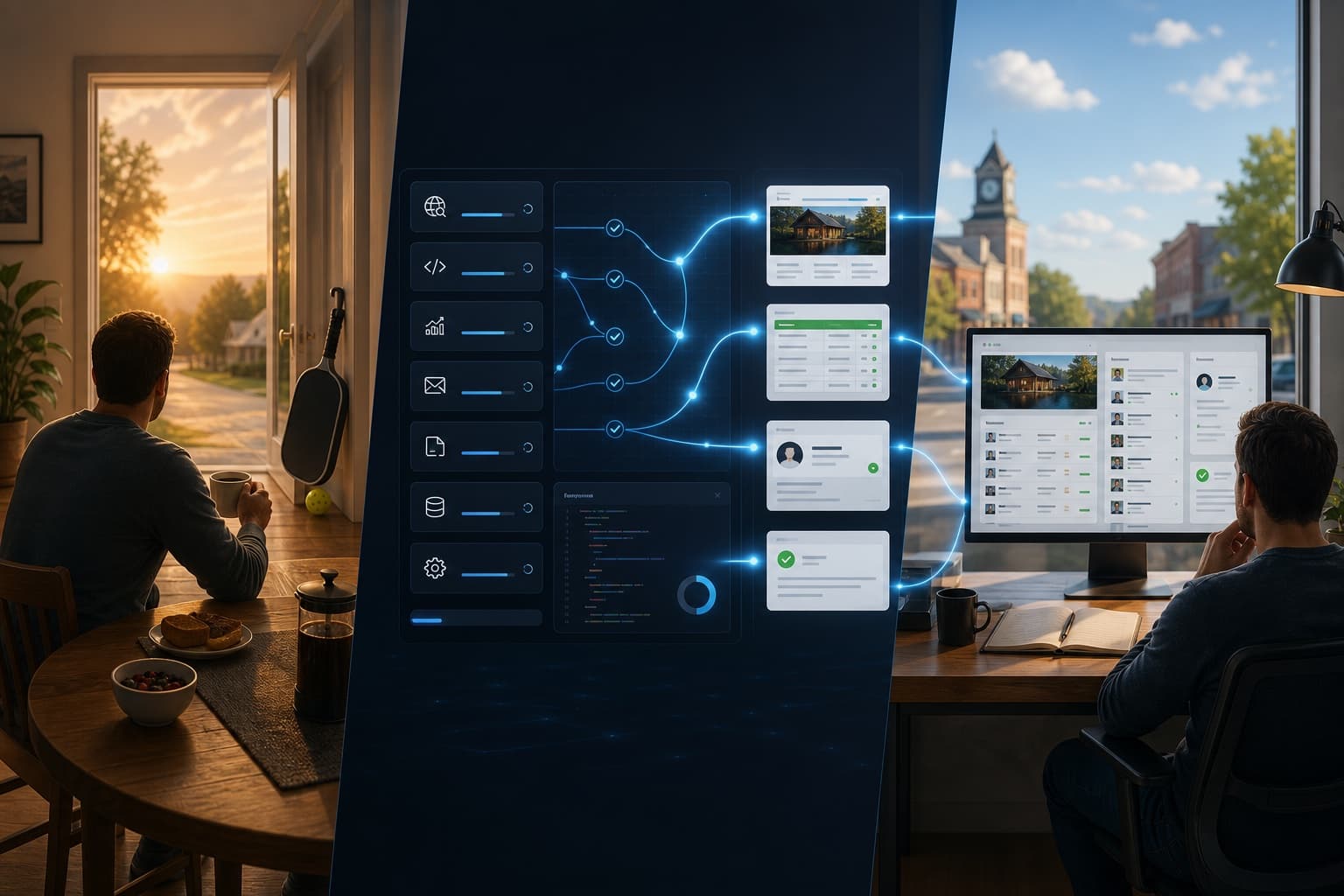
A normal morning. An abnormal amount of work moving.
This morning started like a morning should. I woke up, had breakfast with my family, and went to play pickleball. I was not in front of a screen, refreshing task lists, or trying to force more hours into the day.
But the agent loops had already started. They picked up work that did not finish the night before and continued running it in the background. When I sat down at my computer around noon, I did not open a blank slate. I opened a company that had kept moving.
The most visible run had worked for 3 hours and 54 minutes on Maestro public-release debugging. That does not mean a human stopped being responsible for the release. It means the work did not have to wait for me to be at the keyboard before the investigation, fixes, and completion path could move forward.
The point is not a person doing everything alone. It is a small operator finally having an operating team around the work.
By lunch, the dashboard had a real operating update waiting.
Maestro had a completed debugging run ready for review. Twelve new leads had already been researched and were waiting for approval before they entered the CRM and the introductory email-marketing campaign. A prospect who filled out the web-speed form had also triggered an update, with a direct link to that profile inside the dashboard.
That is the difference between a dashboard that reports activity and an operating system that advances work. The research was not sitting in a browser tab. The form fill was not a disconnected notification. The release work was not a vague note that someone needed to look at later. Each item came back with context, a next step, and a place to make the decision.
The human work did not disappear. It became higher leverage.
My job is still strategy, sales, marketing, and judgment. I decide which ideas are worth pursuing, what the offer should be, which leads should enter the CRM, how we communicate, and what is acceptable to put in front of a customer. That is ownership, not busywork.
The agent layer handles the execution that normally turns a small company into a bottleneck: researching accounts, moving a task forward, organizing the output, watching an inbound signal, and bringing the right context back into one place. It works more like a real company than a prompt box because the work can continue between conversations.
That is how Maestro is meant to be used. Not as a replacement for an owner, but as the execution layer around an owner who is trying to build, sell, and still have a life outside the office.
The one-person-company idea is getting less theoretical.
Sam Altman has publicly talked about the possibility of a one-person billion-dollar company enabled by AI. The headline is easy to dismiss because billion-dollar outcomes are not the point for most people. The useful question is smaller and more practical: what could a person with a clear strategy do if they had an always-on execution layer?
For somebody from a small town, a small family, or a business without outside funding, that question matters. You may not need a massive staff to make the next important move. You need a system that keeps serving the work while you are serving your customers, spending time with your family, or simply thinking clearly enough to choose the next move.
There are real questions about how AI changes jobs. We should take them seriously. But there is also a more immediate opportunity: help capable people do the work of a larger organization without making them sacrifice every hour of their lives to get there.
AI should not make the owner less responsible. It should make a good owner more capable.
Build an operating layer that keeps moving when you step away.
We can map the repeated work, inbound signals, and decisions in your business, then show where an agent-driven operating layer can create real leverage without losing human control.
Book a Strategy Call