Personal Trainers Who Manage Plans Manually Are About to Look Unresponsive
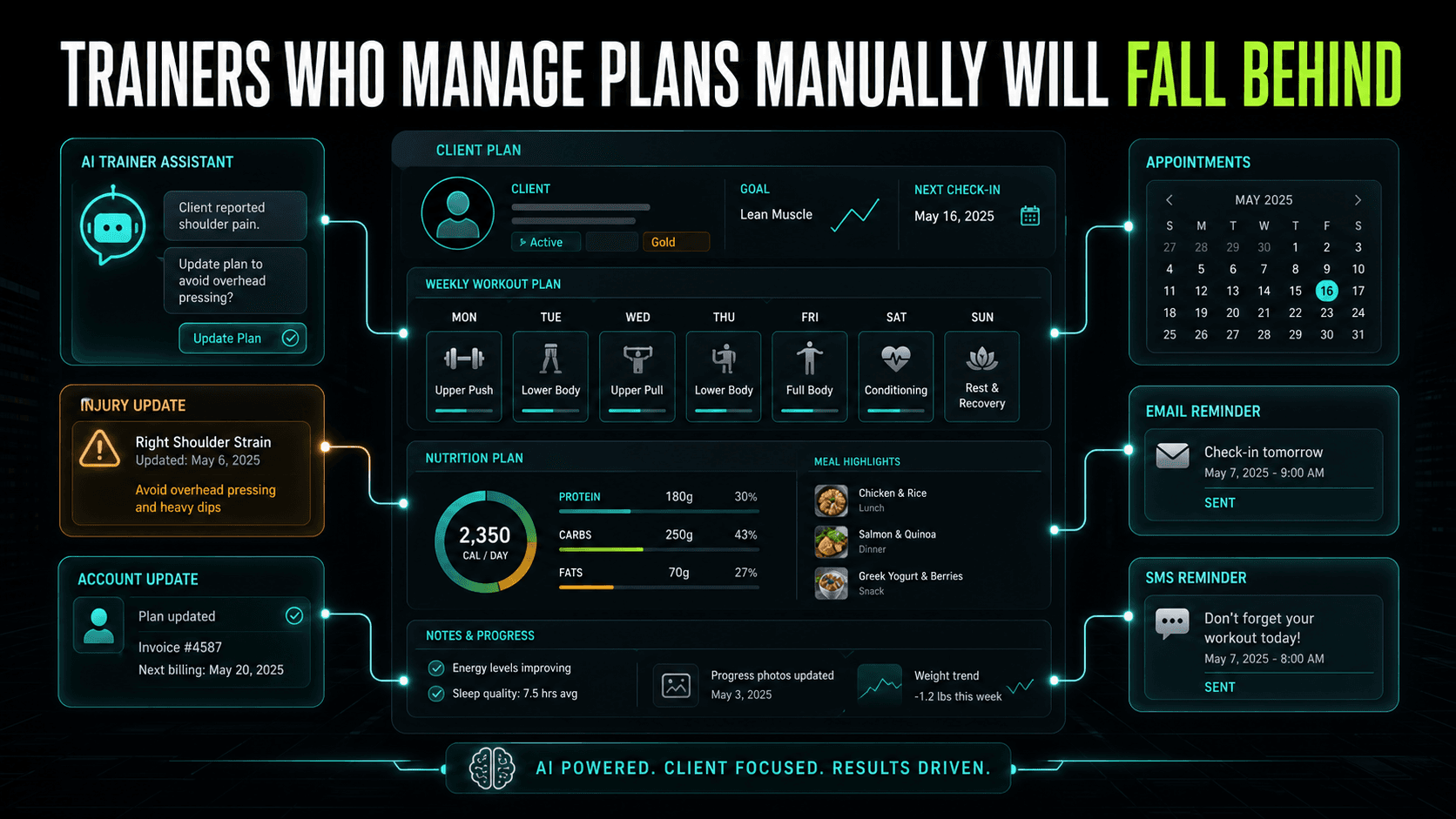
We are building an application for trainers that combines client management, workout planning, nutrition planning, injury-aware updates, and reminders. It is the kind of vertical operating system that shows where AI automation is heading next.
The trainer bottleneck is not knowledge. It is constant plan maintenance
Good trainers already know how to coach. The problem is that every client creates administrative drag. Plans need updates. Nutrition needs adjustment. Injuries change the program. Appointments need reminders. Progress needs context. The work keeps spreading across notes, spreadsheets, texts, and memory.
That drag limits scale. A trainer can be great in person and still look slow when a client needs a plan adjustment, asks what to eat, or mentions an injury between sessions.
The next advantage in training will come from response speed and plan quality. Clients will expect their account to update as quickly as the conversation changes.
The trainer who can update the plan during the conversation will feel more premium than the trainer who needs three tabs and tomorrow morning.
The app acts like a CRM mixed with a planning engine
The application we are building lets trainers instantly create workouts and nutrition plans for clients. Each client has an account, context, goals, and plan data. The trainer can use AI to generate or adjust the plan without starting from scratch.
If a client has an injury, the trainer can converse with the AI inside the application and update that client account. The point is to make plan changes easy while preserving the client record that explains why the change happened.
This is not just a workout generator. It is a vertical CRM with planning intelligence built in. The client relationship and the plan logic live together.
Reminders become part of the operating system
The app can also support reminders by email, and SMS can be added when the business wants that feature. That matters because missed appointments, forgotten check-ins, and ignored plan updates create churn.
When reminders live beside the plan, they can be more useful. The client is not just receiving a generic appointment ping. The trainer has a system that understands what the client is working on and what needs attention.
The result is a more controlled client experience. Planning, accountability, communication, and record keeping all move through the same workflow.
Vertical AI tools will beat generic dashboards
Generic CRMs can store a client. They cannot understand training context without heavy customization. Generic AI chats can draft a workout. They cannot manage the client relationship unless they are connected to the account.
The opportunity is in the middle. Build the operating system around the real work of the vertical, then let AI speed up the tasks that slow the expert down.
For trainers, that means faster plan creation, safer injury-aware adjustments, better accountability, and fewer missed client moments. The fear is simple: clients will notice when one coach feels instantly responsive and another still feels manual.
AI should remove the admin drag from expert service.
If your client workflow depends on manual updates, we can map where a vertical AI operating system would create leverage.
Book a Strategy Call